What is an Ear Infection in Children?
Many parents worry when their child feels pain or discomfort in the ear. A child ear infection happens when germs cause swelling or fluid in the middle ear. This area sits just behind the eardrum. Ear infections are common in young children, especially those under five years old. According to the CDC, most kids will have at least one ear infection by age three. Because children’s ears are still growing, they are more likely to get these infections than adults.
Common Symptoms of Ear Infections in Kids
It is important to spot child ear infection symptoms early. While some children can tell you their ear hurts, others may not. Therefore, watch for these signs:
Sometimes, symptoms are mild. However, if your child has a high fever or severe pain, seek help right away.
Causes and Risk Factors
Ear infections in children often start after a cold or sore throat. Viruses or bacteria can travel from the nose or throat to the ear. As a result, the middle ear fills with fluid and becomes infected. Several factors raise the risk of ear infections in kids:
Because children’s ear tubes are shorter and more level, germs can reach the middle ear more easily.
How Ear Infections Are Diagnosed
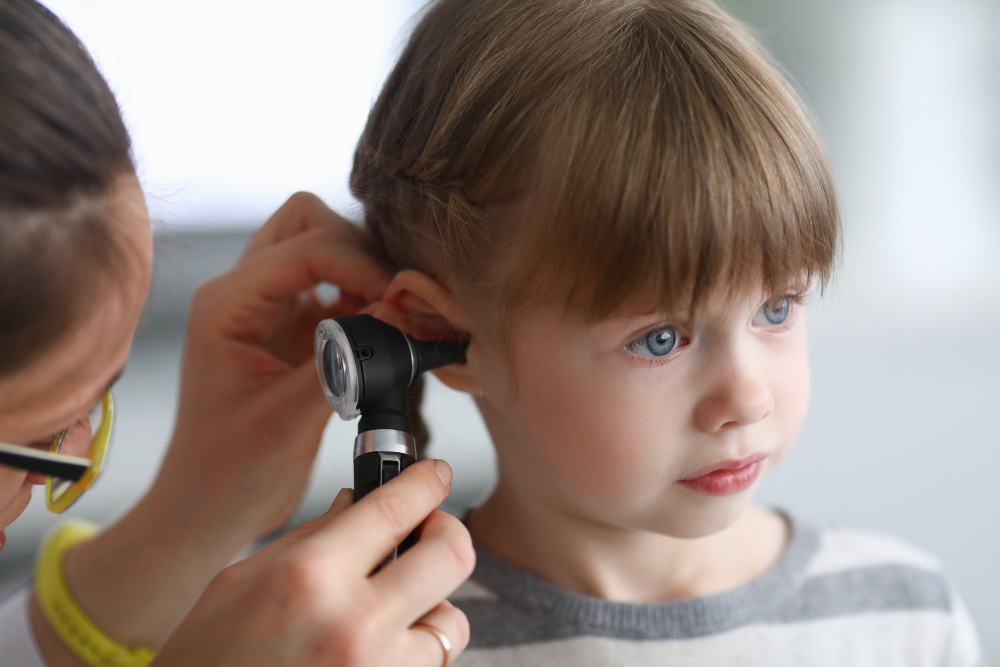
Doctors use a simple tool called an otoscope to look inside your child’s ear. With this, they can see if the eardrum is red, swollen, or has fluid behind it. Sometimes, doctors may use a special test to check for fluid. In rare cases, if infections keep coming back, your child may need a hearing test. Early diagnosis helps prevent problems like hearing loss.
Treatment Options (Medical and Home Care)
Treating ear infections in children depends on the cause and severity. For mild cases, doctors may suggest watching and waiting. Many ear infections clear up on their own within a few days. However, if symptoms are severe or last longer, antibiotics may be needed. Always follow your doctor’s advice on medicine.
For home care, you can:
Never put anything inside the ear unless your doctor says it is safe.
Prevention Tips for Parents
Preventing ear infections in kids is possible with a few simple steps. First, keep your child’s hands clean to stop the spread of germs. Next, avoid exposing your child to tobacco smoke. Breastfeeding for at least six months can also lower the risk. If your child uses a bottle, hold them upright during feeding. Additionally, keep up with vaccines, such as the flu shot and pneumococcal vaccine. These help protect against common germs that cause ear infections.
When to See a Doctor
Sometimes, ear infections need quick medical care. Contact your doctor if:
Early treatment can prevent serious problems, such as hearing loss or spread of infection.
Conclusion
In summary, child ear infections are common but treatable. Knowing the symptoms, causes, and ways to prevent them helps keep your child healthy. If you suspect your child has an ear infection, consult a healthcare specialist at Bhavik ENT Care for personalized advice.